
Cost per day, month and year
Why the same subscription is shown four different ways, and why the numbers always agree.
Open any subscription and its Cost Summary shows what it costs across four horizons: Per day, Per week, Per month and Per year.
This is not decoration. A price only becomes meaningful in comparison, and different intervals are persuasive about different things:
- Per day makes small, frequent costs visible: the €4 coffee is €1,000 a year.
- Per month is how most people budget.
- Per year is how you decide whether something is worth keeping.
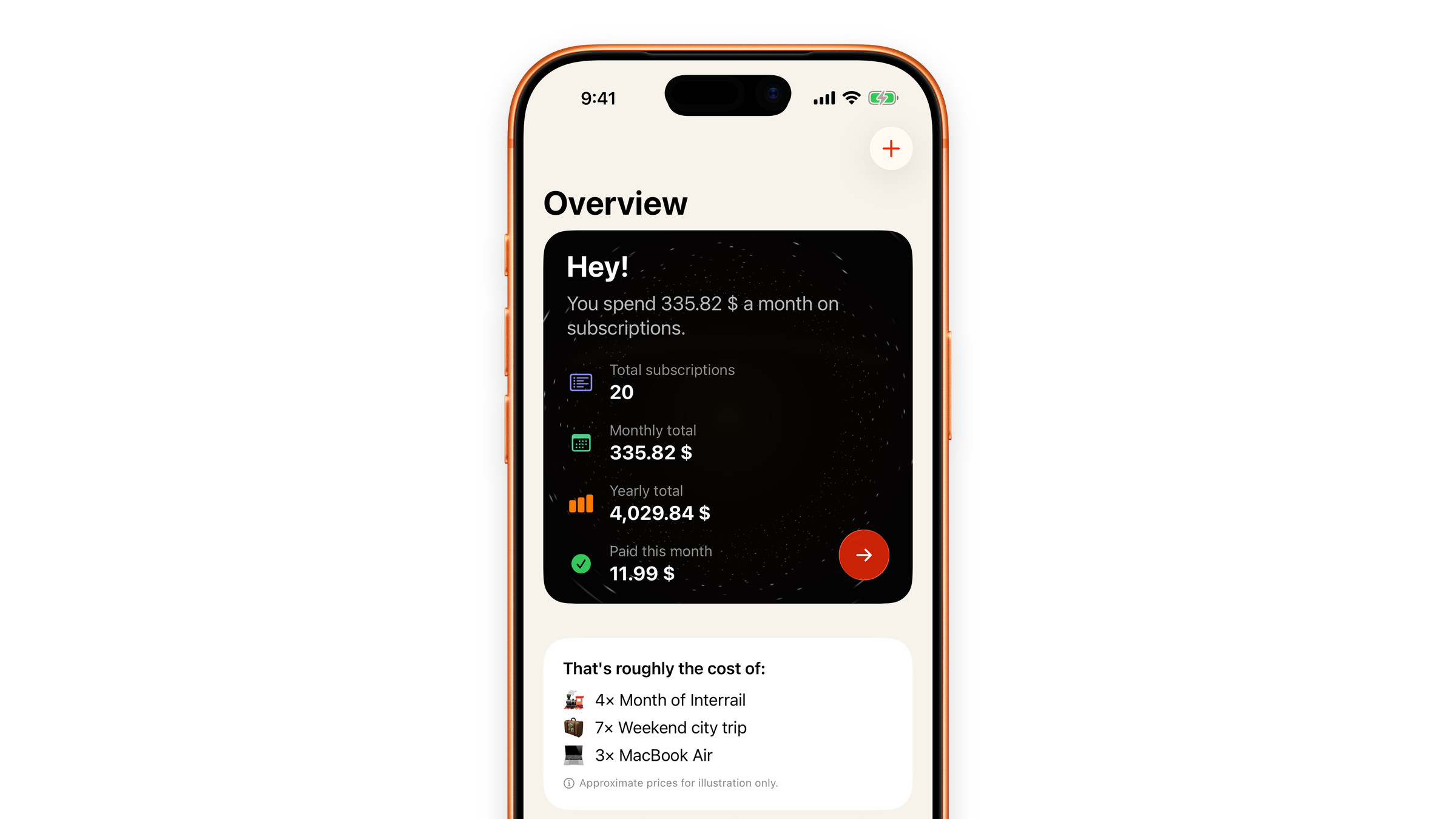
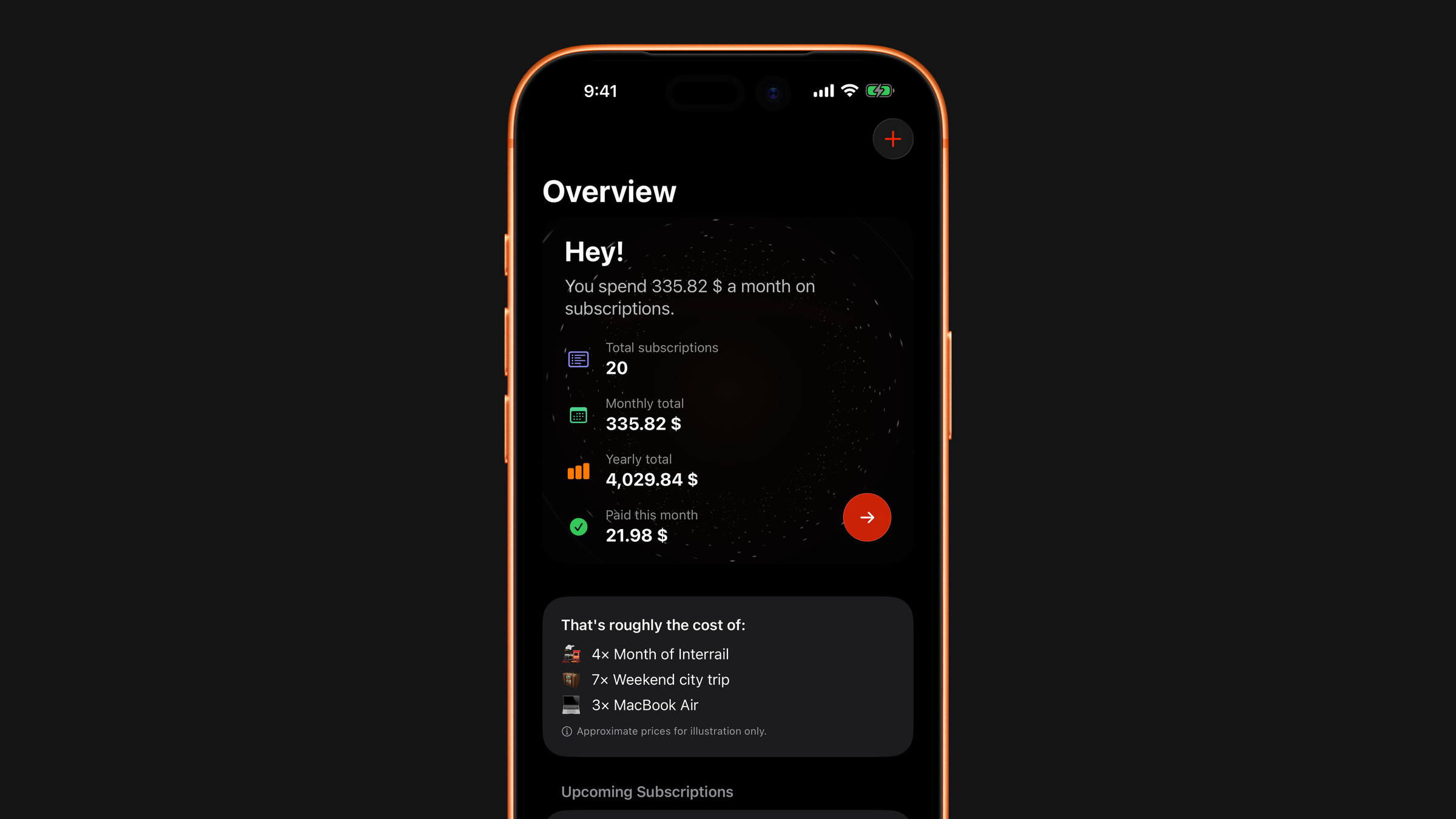
On the Overview tab, the card at the top adds the same figures up for everything at once, as a monthly and a yearly total: see Read your dashboard.
Right above the Cost Summary on a subscription's page, three more figures sit in one row: Per charge is what one billing costs, Spent is what you have paid since the start date, and Charges is how many times it has billed so far. A little lower, the subscription also shows a three-year projection.
How it is calculated
Every cost, whatever its billing period, including custom intervals, is first converted to an annual amount. Every other figure is derived from that annual number.
The practical consequence: the numbers on different screens can never disagree with each other, and a yearly subscription and a monthly one can be compared directly.
If a subscription is shared with other people, these figures count only your share of it.
A one-time payment is left out of the monthly and yearly totals as well: it is a single charge, not a rate. A subscription can also sit outside the totals: switch on Exclude from totals when editing it. It stays in the list and keeps reminding you, but the monthly and yearly totals and the category list on Overview do not count it. That is the right setting for things someone pays back, like a work subscription. A small crossed-out eye marks it in the list, so a total that looks smaller than the list always has a visible reason.
A month is treated as one twelfth of a year, not as 30 days. Over a full year that is the accurate way round; it is why the per-month figure for a weekly cost is not exactly four times the weekly one.
Did this answer your question?